
Idle Speed Control Valve (ISCV) - removal, cleaning and refitting
Removal
1 Disconnect the battery negative lead.
2 Disconnect the valve wiring plug (see illustration).
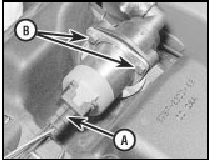
12.2 Idle speed control valve - 1.6 EFI engine
A Wiring plug B Securing bolts
3 Unscrew the two securing bolts, and withdraw the valve from the air cleaner housing.
Cleaning
4 Remove the valve as described earlier in
this Section.
5 Immerse the valve in a container of clean petrol and allow it to soak for approximately three minutes.
6 Use a clean paint brush to clean the bore, slots and piston of the valve.
7 Using a small screwdriver, carefully move the piston up and down in the bore (do not use the slots to do this), then rinse the valve with petrol and dry it, preferably using compressed air (see illustration).
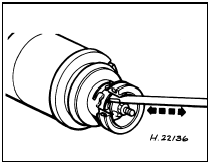
12.7 Using a screwdriver to move the idle speed control valve piston - 1.6
EFI engine
8 Refit the valve as described in the following paragraphs.
Refitting
9 Refitting is a reversal of removal, ensuring
that the mating faces of the valve and air
cleaner are clean.
10 On completion, start the engine and check that the idle speed is stable, and that there are no air leaks. Warm the engine up to normal operating temperature, then switch on all available electrical loads and check that the idle speed is maintained.
See also:
Oil pump - dismantling, inspection and reassembly
Dismantling
1 The oil pump can be dismantled for
cleaning, but if any of the components are
worn, the pump must be renewed as an
assembly.
2 To dismantle the pump, proceed as follows.
3 Unscrew ...
Air cleaner - removal and refitting
The procedure is similar to that described in
Part B of this Chapter for models with
mechanical fuel injection. ...
Idle speed control valve - removal and refitting
Note: A new gasket must be used when
refitting the valve.
2.0 litre SOHC models
1 Disconnect the battery negative lead.
2 Disconnect the idle speed control valve
wiring plug by releasing the reta ...
