
Bonnet - removal and refitting
Removal
1 Open the bonnet and support it on its stay.
2 Disconnect the screen washer pipe on the underside of the bonnet lid (see illustration).
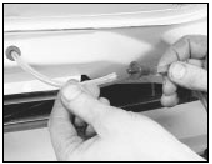
7.2 Disconnecting the windscreen washer fluid pipe
3 Where applicable, disconnect the earth lead from the bonnet.
4 Mark round the hinge plates on the underside of the bonnet lid as an aid to refitting.
5 With an assistant supporting one side of the bonnet lid, unbolt the hinges and lift the lid from the vehicle.
Refitting
6 Refit by reversing the removal operations. If
a new bonnet is being installed, position it so
that an equal gap is provided at each side
when it is being closed.
7 The bonnet should close smoothly and positively without excessive pressure. If it does not, carry out the following adjustment.
8 Screw in the bump stops which are located on the front upper cross rail (see illustration).
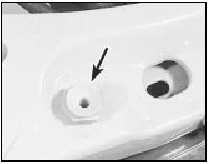
7.8 Bonnet bump stop (arrowed)
Close the bonnet and then readjust the bump stops until the bonnet is flush with the wing upper surfaces.
9 Adjust the striker centrally in relation to the latch. Release it by unscrewing its pressed steel locknut.
10 Screw the striker in or out until the bonnet fully closes under its own weight when allowed to drop from a point 300 mm (12 in) above its released position.
See also:
Light laden valve (Van models) - adjustment, removal and
refitting
1 The light laden valve used on Van models is
a pressure regulating valve which reacts to
suspension height according to vehicle load.
The valve is mounted on the underside of the
vehicle above th ...
Ignition system component check (Every 6000 miles or 6 months)
1 Where applicable, remove the distributor
cap and thoroughly clean it inside and out
with a dry lint-free cloth. Examine the four HT
lead segments inside the cap. If the segments
appear badly bur ...
Rear roadspring (Van models) - removal and refitting
Removal
1 To remove the single leaf type rear
roadspring from the Van, raise the rear of the
vehicle and support it securely under the body
members (see “Jacking and Vehicle Support”).
Support th ...
