
Cab interior trim panels (P100 models) - removal and refitting
Side trim panel
1 Remove the rear pillar trim panel.
2 Remove the side trim panel by prising out the four expander pins from the clips, then pulling out the clips and withdrawing the panel.
3 Refitting is a reversal of removal.
Upper rear trim panel
4 Remove the side trim panels from both
sides of the cab as previously described in
this Section.
5 Remove the cab rear window.
6 Prise out the four expander pins from the trim panel clips beneath the rear window aperture, then pull out the clips (see illustration).
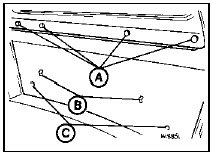
42.6 Cab interior rear panel fixings - P100 models
A Upper and lower trim panel fixings B Jack handle retaining clips C Lower trim panel fixings
7 Remove the blanking covers, then remove the three securing screws from the rear of the headlining.
8 Lower the rear of the headlining and remove the trim panel.
9 Refitting is a reversal of removal.
Lower rear trim panel
10 Remove the side trim panels from both
sides of the cab as previously described in
this Section.
11 Prise out the four expander pins from the trim panel clips beneath the rear window aperture, then pull out the clips.
12 Pull the jack handle from its two retaining clips, then remove the clips.
13 Prise out the two expander pins from the trim panel lower clips, then pull out the clips.
14 Pull the bottom edge of the trim panel away from the rear of the cab, and slide the panel out from under the upper trim panel.
15 Refitting is a reversal of removal.
See also:
Cylinder block and bores - examination and renovation
1 The cylinder bores must be examined for
taper, ovality, scoring and scratches. Start by
examining the top of the bores; if these are
worn, a slight ridge will be found which marks
the top of the ...
Rear brake backplate (drum brakes) - removal and refitting
Caution: Refer to the
precautions in Section 1.
Saloon, Hatchback and Estate
models
1 Remove the rear brake shoes.
2 Disconnect the handbrake cable from the
backplate by extracting the U-clip.
...
Fuel system - depressurising
Warning: The fuel system will
remain pressurised after the engine
is switched off. Comply with all
relevant safety precautions during
this operation and refer to the “Safety first!”
Section at th ...
