
Air conditioner refridgerant charge check (Every 12 000 miles (20 000 km) or 12 months)
1 If applicable, remove the radiator grille being careful not to damage the condenser fins.
2 Check the refrigerant charge as follows.
The engine should be cold and the ambient temperature should be between 64° and 77°F (18° and 25°C).
3 Start the engine and allow it to idle.
Observe the refrigerant sight glass (see illustration)
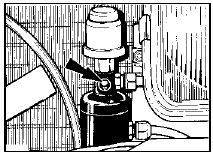
26.3 Air conditioning system refrigerant sight glass (arrowed)
and have an assistant switch on the air conditioning to fan speed III. A few bubbles should be seen in the sight glass as the system starts up, but all bubbles should disappear within 10 seconds. Persistent bubbles, or no bubbles at all, mean that the refrigerant charge is low. Switch off the system immediately if the charge is low and do not use it again until it has been recharged.
4 Inspect the refrigerant pipes, hoses and unions for security and good condition. Refit the radiator grille.
5 The air conditioning system will lose a proportion of its charge through normal seepage typically up to 100 g (4 oz) per year - so it is as well to regard periodic recharging as a maintenance operation.
See also:
Oil pump - dismantling, inspection and reassembly
1.8 litre (R2A type)
1 If oil pump wear is suspected, check the
cost and availability of new parts and the cost
of a new pump. Examine the pump as
described in this Section and then decide
whethe ...
Fuel pump - removal and refitting
Note: Refer to the precautions at the end of
Section 1 before proceeding.
Removal
1 The fuel pump is bolted to the underside of
the car just to the rear of the fuel tank. For
access raise and sup ...
Instrument Cluster
Warning lights and chimes
Warning lights and gauges can alert you to a vehicle condition that may
become serious enough to cause expensive repairs. A warning light may
illuminate when a problem ...
