
Engine mountings - renewal
1 The engine mountings incorporate hydraulic dampers and must be renewed if excessive engine movement is evident.
2 Working in the engine compartment, unscrew the central nuts securing the engine mounting brackets to the tops of the mountings. Recover the washers where applicable.
3 Remove the two bolts or the central nut and washer (as applicable) in each case securing the mountings to the crossmember.
4 Raise the engine using a hoist and lifting tackle attached to the engine lifting brackets on the cylinder head, or a jack with an interposed block of wood under the sump, until the mountings can be withdrawn (see illustration).
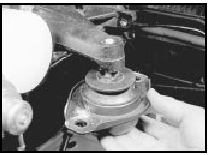
17.4 Withdrawing an engine mounting
5 Fit the new mountings, then lower the engine onto them.
6 Fit the bolts or the nuts and washers (as applicable) securing the mountings to the crossmember, and tighten them.
7 Fit and tighten the central nuts, and washers if applicable, securing the engine mounting brackets to the tops of the mountings.
See also:
Rear seat catch - removal and refitting
Saloon models
1 Working in the luggage compartment,
release the seat catch by pulling the release
knob, or if the cable is broken, use a
screwdriver to release the catch itself.
2 Fold the backre ...
Door interior handle - removal and refitting
Removal
1 Remove the door inner trim panel.
2 Where necessary for improved access, peel
back the waterproof plastic sheet from the
door.
3 Remove the two securing screws in the
case of models up ...
Engine coolant
Checking engine coolant
The concentration and level of engine coolant should be checked at the
mileage intervals listed in the scheduled maintenance guide. The coolant
concentration should be maint ...
