
Fuel pump - removal and refitting
Note: Refer to the precautions at the end of Section 1 before proceeding.
Removal
1 The fuel pump is bolted to the underside of
the car just to the rear of the fuel tank. For
access raise and support the car securely at
the rear.
2 Disconnect the battery earth lead.
3 On the K-Jetronic system relieve the system pressure by slowly loosening the fuel feed pipe union at the warm-up regulator (see illustration). Absorb the fuel leakage in a cloth.
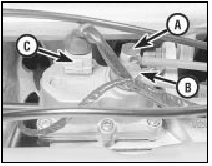
6.3 Warm-up regulator fuel feed pipe (A), outlet pipe (B) and wiring
multi-plug (C)
4 On the KE-Jetronic system relieve the system pressure by slowly loosening the cold start valve union on the top of the fuel distributor (see illustration). Absorb fuel leakage in a cloth.
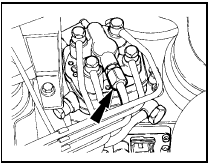
6.4 KE-Jetronic system cold start valve pipe union (arrowed) on fuel
distributor
5 Clamp the fuel inlet hose midway between the tank and the pump using a brake hose clamp, self-locking grips or similar. If the fuel level in the tank is low you may prefer to drain the fuel from the tank into a suitable container once the inlet hose is disconnected.
6 Disconnect the fuel inlet and outlet pipes from the pump, catching fuel spillage in a suitable container (see illustration). Once disconnected do not allow dirt to enter the pipes, temporarily plug or seal them if necessary.
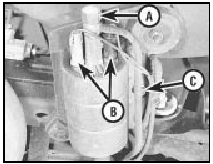
6.6 Fuel pump outlet pipe (A), electrical connections (B) and pump bracket
retaining bolt (C)
7 Note the electrical connections to the pump and disconnect them.
8 Loosen the pump bracket retaining bolt and then withdraw the pump unit with rubber protector sleeve.
Refitting
9 Refitting of the fuel pump is a reversal of
the removal procedure. Renew the feed pipe
from the tank if it is damaged or defective.
10 Check that the rubber protector sleeve is correctly positioned round the pump before tightening the clamp nut.
11 On completion, tighten the warm-up regulator or cold start valve fuel unions, reconnect the battery earth lead, start the engine and check for any fuel leaks.
See also:
Cylinder head - removal and refitting (engine removed)
Note: The cylinder head bolts must always be
renewed after slackening, and a new cylinder
head gasket and camshaft cover gasket must
be used on refitting. If the engine has recently
run, the cylin ...
Distributorless Ignition System (DIS) components - removal and
refitting
Electronic modules
1 Refer to Section 6.
DIS coil
2 Refer to Section 4.
Engine speed sensor
Removal
3 Disconnect the battery negative lead.
4 Disconnect the sensor wiring plug (see
illustratio ...
Carburettor fuel system
The fuel system on all models with carburettor induction is
composed of a centrally mounted fuel tank, a fuel pump, a carburettor and an air
cleaner.
The fuel tank is mounted under the floor pan ...
